
AmazingHiring: Summer product updates
With OpenAI dominating our newsfeeds and industry trends, the necessity for a more automated sourcing process grows daily. AmazingHiring is bringing special summer updates to ensur…
Read more7439

When looking for exceptional talent, turning passive candidates into active ones is one of the things recruiting departments focus on. However, everyone knows how much harder it is to reach out to passive candidates than to people who are actively searching for a job.
Still, there is no need to say that pursuing passive candidates is worth all of the efforts, and researches support that talent that is currently most probably successfully employed is more likely to contribute to the company’s success.
The difference in the motivation of active and passive candidates makes it a very complicated task for recruiters to get a response from the candidates. That’s why it’s crucial to follow certain recruiting rules when reaching out to passive candidates.
Passive candidates are usually those people who are already working for a company and not actively applying for any other jobs. They either don’t have much interest in other positions because they’re satisfied with their job, or their talent and experience are so outstanding that they do not need to submit their applications or share CVs — recruiters find them anyway.
Passive candidates are valuable assets for their companies and that’s what makes them interesting and desirable for recruiters. The main issue with this type of candidate is that they are not very responsive to recruiter outreach.
However, it’s not the reason to completely give up on them. Even though passive candidates are not searching for a new job, they still might consider your job opportunity if you can sell it right.
Here at AmazingHiring, we occasionally witness mistakes that recruiters make when reaching out to passive candidates. That is why we’d like to make a list of all important recruiting rules to keep in mind when reaching out to passive candidates. With these pieces of advice, you might reach the expected outcome of your conversations with potential future employees of your companies faster.
There are certain recruiting rules which can help you to get the most out of your sourcing efforts by impressing the candidates and persuading them to engage further.
Your approach should be well-planned and careful
The common mistake of many recruiters is that they reach out to candidates out of nowhere via channels they don’t expect to get messages from recruiters on. These channels are usually Facebook, Instagram, or messenger apps like Telegram — basically, channels that are usually considered personal. In the case of passive candidates, it’s better to use traditional channels, like email and LinkedIn.
You can send a short friendly message on Facebook if this is your only available channel but you need to be apologetic and provide as many details about finding the candidate there as possible. No need to say that you must not look like a stalker.
Please avoid reaching out to the candidate on Instagram unless they are an influencer and build their professional brand in this network.
Sending out personalized emails is one of the most effective ways to reach out to passive candidates. They should spark interest in the candidates that would encourage them to consider other job opportunities, even though they’re happy at their current job.
We have covered this in one of our past articles in great detail. Read the How to Write Cold Recruiting Emails article on our blog.
Still, let’s go through the biggest common sense rule: Always explain where the email is coming from.
And saying that you found it via a sourcing tool like AmazingHiring is not the right answer because AmazingHiring only works as a search engine. We scan the web to find what has been willingly shared online by people. It is important to provide the candidate with a true explanation of where their email is available to the public’s eye/ Instead, it’s better to refer to the resource where the candidate shared the email address. Explain that you found it in an open-source because personal data is covered by the GDPR and other privacy protection laws of different countries and you don’t want your candidate to think that you bought their email somewhere.
Here is what you need to include in a well-crafted personalized sourcing email:
The reason why you’re reaching out. Explain what drew your attention to that specific candidate. Mention specific skills or accomplishments the candidate has that are related to the company or the job.
Standard job opportunity information. This includes the project’s description, tech stack, salary, and growth prospects.
Call to Action. Invite the candidate to chat or have a call to proceed with the hiring process.
Simple tips that will help you land a response from a candidate
NEVER reach out to candidate emails that look very personal. Yes, they might have submitted a GitHub commit under their private email called sexybeast911@gmail.com or worldoftanks1991@yandex.ru 10 years ago but that does not mean that you should use that email to reach out with work proposals. The most okay way is to use an email that looks like an official email containing the candidate’s surname and/or name, e.g. name.surname@gmail.com. Strongly avoid nickname-based emails — unless they are published in the candidate’s Twitter bio.
By the way, a professional Twitter account of someone can be a great point of contact for job opportunities. However, you most probably won’t be able to DM the candidate. So you will need to reach out to them via a tweet or a reply to one of their past tweets, and you need to make sure it doesn’t feel creepy. Do not send job offers, ask if you could reach out to them via a DM or in a different place.
Always think: if you were a candidate, would you feel okay if a recruiter reached out to you like this?
Passive candidates want to learn more about the company’s culture, values, and benefits. It’s great when a recruiter gives a candidate a quick overview of their company and what makes them unique (or even better than the candidate’s current employer — just don’t mention their current situation in any way, even if you know it is not offering many benefits).
It’s also worth mentioning the workload and expectations for the job as well as how this specific role will be beneficial for the candidate’s career.
Check if the candidates share their interests online, participate in conferences or forums related to the industry they work in and their profession. This will help you find the connection points, where you can engage and get to know the candidate better.
Checking candidate’s social media profiles will allow you to think through what their possible wishes and needs in a job may be.
It’s good to reach out to the passive candidate offering a lot of value. Write a friendly email with all of the needed details, so the candidate has the overall picture of the job. That way there will be higher chances the passive candidate will consider switching jobs.
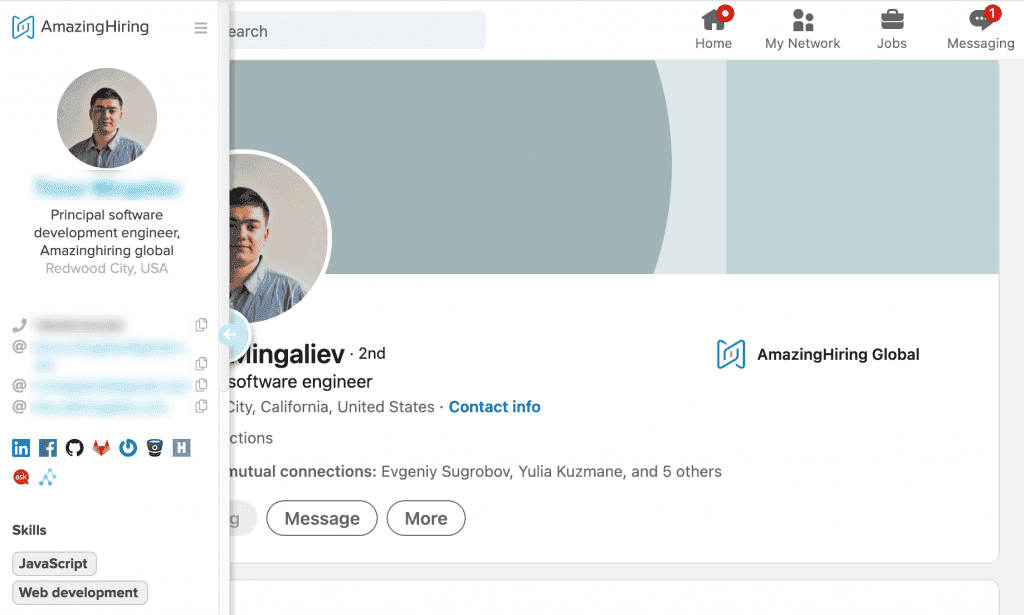
To simplify the search of candidates and their interests, use a professional sourcing tool like AmazingHiring. We automatically search for candidates’ profiles across 50+ sources (like Linkedin, Github, Stackoverflow, Facebook) and provides sources with direct contacts of the programmers.
You can start by testing AmazingHiring’s free Chrome extension.
When you reach out to passive candidates, there is already a risk that your efforts will not be successful. However, you can make your low chances of getting a response even smaller if you make the common mistakes recruiters do when they approach passive candidates.
To make sure you’re doing everything right, here is the list of what you should not do:
And, if you get a negative response from your candidate, apologize and try to turn the situation around but stop offering to look at the job description.
Reaching out to passive candidates can be quite challenging for recruiters, however, it’s worth it as the best people do not search for jobs. Let’s go through the recruiting rules for passive candidates again:
By following those rules you will have higher chances of getting more passive candidates interested in the job opportunity and will keep your company’s reputation clean.
Photo by RODNAE Productions from Pexels
With OpenAI dominating our newsfeeds and industry trends, the necessity for a more automated sourcing process grows daily. AmazingHiring is bringing special summer updates to ensur…
Read more
This article is written by Eugeniia Filipovich, a Technical Recruiter, Trainer and Manager with more than 6 years of experience who helped scale some of the most robust global tech…
Read more
Technical recruitment is a dynamic industry, where needs and trends are constantly changing. AmazingHiring team has introduced new features to bring even more value to recruiters a…
Read more
Why use Twitter for sourcing? The global talent shortage has never been as dramatic as it has been in the last 16 years. New roles are especially difficult to fill when it comes to…
Read moreContact us at sales@amazinghiring.com